
Library > Subject Guides > Ministry Topics > Women in Ministry
Subject Guide: Women in Ministry
Topic Overview
Women in ministry can be influenced by the hierarchical view of headship of men called the Complementarian position, or the view that men and women are equal in the Church called the Egalitarian view. Given the history of the Holiness and Pentecostal traditions, many of these resources will more heavily address the Egalitarian position.
Recommended Books
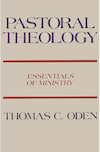
Thomas C. Oden
Chapter 4 covers women in pastoral office and eldership.
Scholarly Books
Available Books
Locked/Paid Books
- (paperback) Thomas C. Oden, Pastoral Theology: Essentials of Ministry (Chap. 4: “Women in the Pastoral Office”)
- (paperback) Deborah Menken Gill, “The Pastorals,” Life in the Spirit: New Testament Commentary, eds. Arrington and Stronstad, Chap. 1 Tim. 3. (Keener is heavily quoted.)
- (paperback) William J. Webb, Slaves, Women, and Homosexuals: Exploring the Hermeneutics of Cultural Analysis, 2001. This addresses the hard passages, putting guardrails so that slavery and homosexuality are not advocated for.
- (paperback) Ruth A. Tucker, Women in the Maze: Questions and Answers on Biblical Equality. This is a historical examination of the Reformation and other points in history.
- (paperback) Drummond, Women of Awakening
- (paperback) Sumner, Men and Women in the Church
- (paperback) Ruth A. Tucker and Walter Liefeld, Daughters of the Church: Women and ministry from New Testament Times to the Present.
- (paperback) Burgess and McGee, “Women, Role of,” Dictionary of Pentecostal and Charistmatic Movements (DPCM).
Recommended Journal Articles

Craig Keener and other authors
- Craig Keener articles
- More on the Roles of Women in Antiquity
- “I’ve Got You Covered”: The Cultural Background for Veiling Women
- Mutual Submission Frames the Household Codes
- Interpreting 1 Timothy 2:8-15
- How Does Paul Interpret Eve in 1 Timothy 2?
- The Role of Women in Proverbs
- A Negative Model Of Manhood In Judges 19
- Divorce as a Justice Issue
- Sexual Infidelity as Exploitation
- The Bible and Rape
- Paul and Sexual Harassment
- Together in the New Humanity
- 1-2 Corinthians [New Cambridge Bible Commentary]
- Shmuel Safrai, “The Place of Women in First-century Synagogues: They were much more active in religious life than they are today,” Priscilla Papers 16, no. 1 (Winter 2002).
- Mimi Haddad
- Did Paul Really Say That About Women?
- The Fundamentalist-Modernist Controversy and Women in Leadership
- Egalitarians: A New Path to Liberalism? Or Integral to Evangelical DNA?
- A Consistent Church?
- The TNIV – What’s at Stake?
- What Language Shall We Use: A Look at Inclusive Language for People, Feminine Images for God, and Gender-Accurate Bible Translations
- Racism and Sexism: The Groans of a New Creation
- An Invisible People, An Invisible Problem
- Ideas Have Consequences: Faith, Gender, and Social Ethics
- Ideas Have Consequences
- Evidence for and Significance of Feminine God-Language from the Church Fathers to the Modern Era
- Egalitarian Pioneers: Betty Friedan or Catherine Booth?
- Women and Revival Work: Acts 2:17-21—Revival’s Magna Charta
- St. Clare Of Assisi, Founder Of The Poor Clares (1194-1253)
- Priscilla, Author of the Epistle to the Hebrews?
- Foreword to The Methodist Defense of Women in Ministry
- Jane L. Crane, “Genesis 3:16 and the Character of God,” (November 2025)
Dr. Jon Ruthven
This covers Galatians 3, the filling, anointing, and joint-heirs position of women in Christ.
Bernadette Brooten, Department of Near Eastern and Judaic Studies, Brandeis University
Background: She directs the Feminist Sexual Ethics Project and is a “lesbian scholar.” These articles are listed for their archeology and historical content, not for their theology.
- “Female Leadership in the Ancient Synagogue,” in From Dura to Sepphoris. Ed. Ze’ev Weiss and Lee Levine. Journal of Roman Archaeology Supplementary series 40 (2000) 215–223;
- “Jewish Women’s History in the Roman Period: A Task for Christian Theology,” Harvard Theological Review 79 (1986) 22–30; also in Christians Among Jews and Gentiles: Essays in Honor of Krister Stendahl on his Sixty-fifth Birthday. Ed. George W. E. Nickelsburg and George W. MacRae. Philadelphia: Fortress, 1986, 22–30;
- “Inscriptional Evidence for Women as Leaders in the Ancient Synagogue,” in Society of Biblical Literature—1981 Seminar Papers. Ed. Kent H. Richards. Chico, CA: Scholars Press, 1981, 1–17;
- “‘Junia…Outstanding among the Apostles’ (Romans 16:7),” in Women Priests: A Catholic Commentary on the Vatican Declaration. Ed. Leonard Swidler and Arlene Swidler. New York: Paulist, 1977, 141–144; German translation in Frauenbefreiung. Biblische und theologische Argumente. Ed. Elisabeth Moltmann-Wendel. Munich: Kaiser, 1978, 148–151.
- “Early Christian Women and their Cultural Context: Issues of Method in Historical Reconstruction,” in Feminist Perspectives on Biblical Scholarship. Ed. Adela Yarbro Collins. Chico, CA: Scholars Press, 1985, 66–91; German translation in Einwürfe 2 (1985) 62–93;
- “Women and the Churches in Early Christianity,” Ecumenical Trends 14 (1985) 51–54;
- “Paul and the Law: How Complete was the Departure?” The Princeton Seminary Bulletin, Supplementary Issue, No. 1 (1990) 71–89; [Law and Gender]
- “The Gospel in Conflict: Paul’s Opponents in Galatians,” The Bible Today 18:2 (1980) 89–95;
- “‘Iael Prostates’ in the Jewish Donative Inscription from Aphrodisias,” in The Future of Early Christianity: Festschrift for Helmut Koester. Ed. Birger Pearson, et al. Minneapolis: Fortress, 1991, 149–162; [Women patrons]
- “The Gender of Iael in the Jewish Inscription from Aphrodisias,” in Of Scribes and Scrolls: Studies in the Hebrew Bible, Intertestamental Judaism, and Christian Origins. Presented to John Strugnell on the Occasion of His Sixtieth Birthday. Ed. Harold W. Attridge, John J. Collins, and Thomas H. Tobin. Lanham, MD: University Press of America, 1990, 163–173;
- “Patristic Interpretations of Romans 1:26,” in Studia Patristica XVIII: Papers of the 1983 Oxford Patristics Conference. Vol. I: Historica-Theologica-Gnostica-Biblica. Ed. Elizabeth A. Livingstone. Kalamazoo, MI: Cistercian, 1985, 287–291;
- “Nature, Law, and Custom in Augustine’s On the Good of Marriage,” in Walk in the Ways of Wisdom: Essays in Honor of Elisabeth Schüssler Fiorenza. Ed. Shelly Matthews, Cynthia Briggs Kittredge, and Melanie Johnson-DeBaufre. Harrisburg, PA: Trinity Press International, 2003, 181–193;
- “Introduction,” Beyond Slavery: Overcoming Its Religious and Sexual Legacies, edited by Bernadette J. Brooten with the editorial assistance of Jacqueline L. Hazelton. New York: Palgrave Macmillan, 2010;
- “Response to ‘Corinthian Veils and Gnostic Androgynes’ by Dennis Ronald MacDonald,” in Images of the Feminine in Gnosticism. Ed. Karen L. King. Philadelphia: Fortress, 1988, 292–295;
Videos (academic)
Resources
- Women In Ministry With Sandra Richter, Seedbed
- Women, Ministry, and Scripture (Part I) by Ben Witherington
- Women, Ministry, and Scripture (Part II) by Ben Witherington
- When Women Lead by Scot Mcknight; Carolyn Moore
- The Meaning of “Women Must Learn in Quietness and Submission” by Gary Hoag